Leave Your Message
AI Helps Write

How to Choose the Best Fruit Dryers for Your Business?

Choosing the right Fruit Dryers can shape your production costs, product quality, and customer satisfaction. A suitable machine should do more than remove moisture. It must deliver consistent texture, attractive color, safe handling, and dependable output during busy production periods.

Start by matching the dryer with your business scale. A small farm may need a compact cabinet dryer with adjustable trays. A growing processor may require continuous airflow, stronger insulation, and larger batch capacity. Consider the fruits you process, too. Apple slices, mango strips, and berries release moisture at different rates. One setting rarely suits everything.

Temperature control matters. Look for accurate sensors, even airflow, removable trays, and easy-to-clean surfaces. Stainless steel construction can support hygiene and long-term maintenance. Energy use also deserves close attention. A cheaper machine may consume more electricity every day. That difference becomes significant over a full production year.

Check the supplier’s technical support, warranty terms, spare parts, and operating guidance. Ask for test results using fruits similar to yours. Inspect sample batches for color, flexibility, flavor, and moisture consistency. Keep written records during testing. They reveal problems that a sales brochure may hide.

There is no perfect machine.

A spreadsheet cannot predict every drying challenge. Room humidity, fruit ripeness, and slice thickness can change results. Some businesses also underestimate cleaning time. Review real workflow demands before purchasing. The best choice combines verified performance, practical experience, and room for future growth. A careful trial can prevent an expensive mistake.
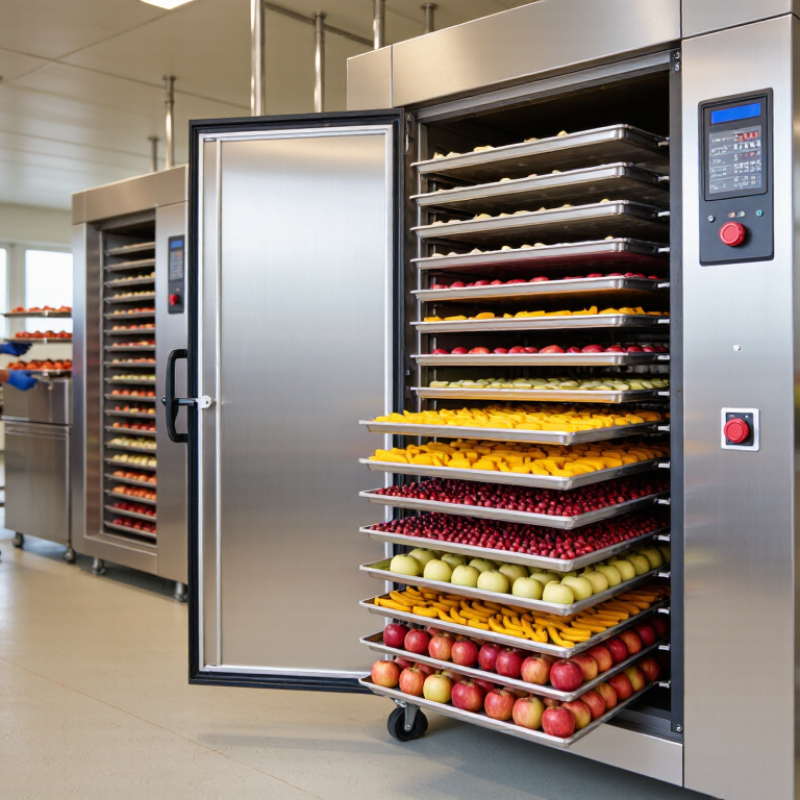
How to Choose the Best Fruit Dryers for Your Business?

Define Your Business’s Fruit Drying Needs and Production Goals

How to Choose the Best Fruit Dryers for Your Business?

Define your business’s fruit drying needs before comparing equipment. A small farm selling weekend-market snacks has different goals from a processor supplying retailers. Record your weekly harvest, seasonal peaks, fruit sizes, and expected dried output. Fresh fruit contains considerable water, so estimate yield after drying rather than using fresh weight alone. Measure available floor space, electrical capacity, ventilation, and labor hours. These details prevent an expensive mismatch.

Production goals should include moisture targets, texture, appearance, batch time, and daily capacity. If you sell soft dried mango, gentle temperature control may matter more than maximum speed. Crisp apple slices may require different airflow and drying time.

Ask how often the machine will operate during peak harvest. A dryer rated for occasional use may struggle with continuous production. Keep batch records, including load weight, temperature, drying time, and water activity when appropriate.

My early estimates were too optimistic because I ignored loading and cleaning time. That mistake changed the real output.

Fruit variety also affects the design choice. Sticky berries can slow unloading and demand careful tray cleaning. Uneven slices can dry inconsistently, creating quality problems inside one package. Choose equipment that supports accurate controls, easy sanitation, safe food-contact surfaces, and operator training. Leave room for maintenance. Pilot batches reveal problems that product brochures cannot show. Test several loads before committing to a production schedule.
Compare Dryer Types, Capacities, and Drying Technologies

Choosing the best fruit dryer starts with your actual production pattern, not a catalogue specification. Measure daily fruit intake, target moisture, slice thickness, and seasonal peaks. FAO’s 2019 State of Food and Agriculture estimated that 14% of food is lost between harvest and retail. A reliable dryer can convert part of that fragile surplus into a stable product.

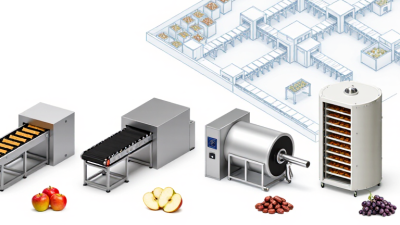
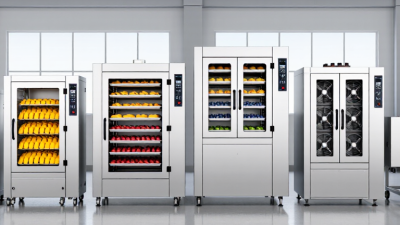
Tray or cabinet dryers suit small and medium batches. They offer simple loading, flexible recipes, and easy inspection, but operators must rotate trays for uniform drying. Tunnel dryers provide greater capacity and steadier airflow. Continuous belt dryers fit larger operations, especially when sliced fruit enters production every day. Freeze-drying protects shape, colour, and aroma better, yet its vacuum system and refrigeration demand major capital. It may be excessive for ordinary snack fruit. Sometimes, simple is better.

Hot-air systems usually deliver the lowest purchase cost. Heat-pump dryers can recover heat and control temperature more precisely, which helps sensitive fruit. Vacuum drying reduces boiling temperature and may shorten processing time. Compare capacity in kilograms of fresh fruit per hour, not finished-product claims. UNEP’s Food Waste Index Report 2024 reported 1.05 billion tonnes of food waste in 2022, showing why dependable throughput matters. Still, energy figures can mislead. Test one full batch, including washing, loading, cooling, and cleaning. A spreadsheet will not reveal sticky trays, uneven colour, or an operator’s ten-minute delay.

Assess Energy Efficiency, Controls, Hygiene, and Product Quality

Choosing fruit dryers for a business requires more than comparing capacity and purchase price. In production trials, I watch energy use per kilogram of finished fruit, not only heater power. A dryer using variable-speed airflow can reduce wasted heat during slow moisture removal. Insulated doors and sealed chambers matter too. Ask for measured data under realistic loads, including startup time and standby consumption. Short tests can mislead. They may ignore humid afternoons and unevenly sliced fruit.

Controls should make repeatable drying possible. Look for temperature, humidity, airflow, and time settings with clear readings. Recipes help operators reproduce results across shifts, while alarms can flag overheating or fan failure. Data logging supports quality checks when customers question texture or moisture. Yet automation is not magic. I once saw operators trust a sensor that had not been calibrated for months. Add calibration checks to maintenance records, then compare readings with a verified handheld instrument.

Hygiene directly affects product quality and customer confidence. Choose smooth, corrosion-resistant food-contact surfaces, removable trays, and designs that prevent pulp from collecting. Cleaning access should be practical, not merely promised in a manual. Check whether trays can be washed, dried, and inspected quickly between batches. Air filters need scheduled replacement. Fruit should emerge with consistent color, aroma, and chew, rather than dry edges and soft centers. Small batches reveal defects faster. Every fruit behaves differently, so one cycle may need adjustment for ripeness, slice thickness, and sugar content.

Calculate Equipment Costs, Operating Expenses, and Business Returns

Choosing the best fruit dryer starts with a return calculation, not a catalog price. FAO’s The State of Food and Agriculture 2019 estimates that 14% of food is lost between harvest and retail. Drying can protect part of that value, but only with reliable throughput. Record fresh weight, final moisture, drying time, labor hours, and rejected batches. Measure twice.

For example, 500 kilograms of fruit at 80% moisture produces about 118 kilograms at 15% moisture. A dryer using 425 kilowatt-hours per batch would cost about $34 at the 2024 U.S. industrial electricity average, near eight cents per kilowatt-hour, according to the U.S. Energy Information Administration. Add $45 for labor, cleaning, maintenance, and packaging. The batch cost becomes roughly $79, excluding raw fruit and financing. Energy performance can vary sharply with loading depth and airflow. Real trials matter more than brochure claims.

Assume the dried fruit sells for $4 per kilogram and raw fruit costs $0.40 per kilogram. Revenue reaches about $472, while fruit and conversion costs total approximately $279. The contribution is $193 per batch. A $25,000 dryer would need around 130 similar batches before simple payback. That is not a guaranteed return. My first spreadsheet ignored seasonal underuse and downtime. Include both. Check the calculation against three months of production records, not optimistic capacity figures.

How to Choose the Best Fruit Dryers for Your Business? - Calculate Equipment Costs, Operating Expenses, and Business Returns
Financial and Operating Metric Small Batch Cabinet Dryer Medium Batch or Trolley Dryer Large Continuous Belt Dryer
Production and Utilization Assumptions
Typical fresh-fruit input capacity 80 kg/hour 250 kg/hour 600 kg/hour
Operating schedule 8 hours/day × 300 days/year 8 hours/day × 300 days/year 8 hours/day × 300 days/year
Assumed average utilization 70% 70% 70%
Annual fresh-fruit input 134,400 kg 420,000 kg 1,008,000 kg
Assumed fresh-to-dried yield 15% 15% 15%
Annual dried-fruit output 20,160 kg 63,000 kg 151,200 kg
Average selling price of dried fruit $8.50/kg $8.50/kg $8.50/kg
Estimated annual sales revenue $171,360 $535,500 $1,285,200
Equipment Investment
Dryer purchase cost $28,000 $72,000 $185,000
Installation, commissioning, and initial setup $4,000 $9,000 $25,000
Initial utilities, food-safety setup, and contingency $3,000 $6,000 $10,000
Total estimated initial investment $35,000 $87,000 $220,000
Annual Operating Expenses
Fresh-fruit purchasing cost $73,920 $231,000 $554,400
Electricity consumption 12 kW connected load 38 kW connected load 95 kW connected load
Estimated annual electricity cost at $0.12/kWh $2,419 $7,661 $19,152
Direct labor and production supervision $48,000 $96,000 $192,000
Packaging cost at $0.65/kg of finished product $13,104 $40,950 $98,280
Routine maintenance allowance $1,120 $2,880 $7,400
Other production overhead at 5% of revenue $8,568 $26,775 $64,260
Total estimated annual operating expenses $147,131 $405,266 $935,492
Business Return Indicators
Estimated annual operating profit before tax and financing $24,229 $130,234 $349,708
Operating profit margin 14.1% 24.3% 27.2%
Estimated simple payback period 1.45 years 0.67 years 0.63 years
Break-even dried-fruit selling price $7.30/kg $6.43/kg $6.19/kg
Annual finished-product output per $1,000 of initial investment 576 kg 724 kg 687 kg
Planning basis: The model assumes 300 operating days per year, 8 production hours per day, 70% average equipment utilization, a 15% fresh-to-dried yield, electricity at $0.12/kWh, fresh fruit at $0.55/kg, packaging at $0.65/kg of finished product, and an average dried-fruit selling price of $8.50/kg. Results are illustrative financial-planning estimates; actual performance will vary by fruit variety, moisture content, labor rates, energy tariffs, utilization, packaging format, and market price.
Calculation logic: Annual revenue = annual dried-fruit output × selling price. Annual operating profit = annual revenue − annual operating expenses. Simple payback period = total initial investment ÷ annual operating profit.

Choose, Test, and Maintain the Best Fruit Dryer for Your Needs

Choosing the best fruit dryer starts with your daily production, not its advertised capacity. A small café may need a compact unit, while a processing kitchen requires steady airflow and larger trays. Measure your workspace carefully. Leave room for loading, cleaning, and ventilation.

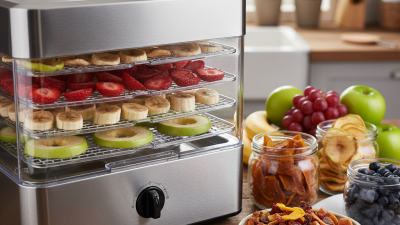
Check temperature control, tray spacing, drying time, and energy use. Stainless steel surfaces are easier to sanitize after sticky fruit batches. Test the dryer with mango slices, apple rings, or strawberries before making a final decision. Cut pieces evenly, record their weight, and note the texture after six hours. Good results should be flexible, dry inside, and free from burnt edges. A simple test reveals more than a sales description.

I once underestimated tray depth. It caused uneven drying.

Tips: Keep a testing log with fruit type, slice thickness, temperature, and drying time. This creates reliable production records and helps staff repeat successful batches. Do not trust one test alone. Humidity, ripeness, and slice size can change the result.

Maintenance protects both quality and operating costs.

Clean trays after every use, especially around corners where fruit sugars collect. Inspect door seals, fans, and heating elements weekly. Remove dust from air vents before it restricts circulation. Calibrate the temperature occasionally with a separate thermometer. The displayed number may drift. Replace damaged parts promptly, and stop using the dryer if wiring looks unsafe. A maintenance routine feels tedious, but it prevents inconsistent texture and avoidable downtime.