Leave Your Message
AI Helps Write

2026 Best Dried Fruit Dryer for Global Buyers?

Global demand for dried fruit continues to expand as consumers seek convenient, shelf-stable foods. Grand View Research has reported steady growth in the global dried fruit market, supported by retail, bakery, snack, and foodservice applications. However, market forecasts differ by region, product category, and reporting method. That difference deserves attention.

FAO estimates that 13.2% of food is lost between harvest and retail worldwide. A reliable Dried Fruit Dryer can help reduce quality losses when it controls heat, airflow, humidity, and drying time accurately. For global buyers, the machine is not merely a heated cabinet. It affects color retention, texture, food safety, labor efficiency, and production consistency. Small details matter. Uneven trays can leave mango slices leathery outside and wet inside.

This 2026 guide compares dryer types, capacity ranges, energy sources, automation, sanitation design, and after-sales support. It also considers practical indicators, including final moisture content, water activity, temperature uniformity, energy consumption per kilogram, and cleaning access. Reports from the FAO, the U.S. Department of Energy, and international market research firms provide useful context for these decisions. Yet published data cannot replace a factory visit or a controlled sample test. Buyers should request real drying results using their own fruit, slice thickness, and target moisture level. A supplier’s brochure may look precise. Field performance can be different. This guide therefore combines industry evidence with purchasing experience, while recognizing that no single dryer fits every climate, crop, or budget.

2026 Best Dried Fruit Dryer for Global Buyers?

What Is a Dried Fruit Dryer and How Does It Work?

A dried fruit dryer removes moisture from fresh fruit through controlled heat and moving air. It is more than a heated cabinet. The machine must manage temperature, airflow, humidity, and drying time together.

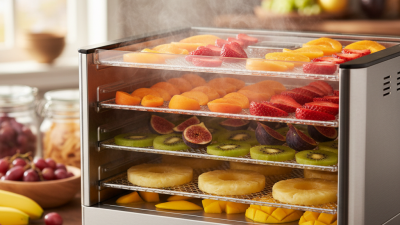
Fresh fruit is sliced or prepared before entering the drying chamber. Warm air passes across the pieces and absorbs surface moisture. As drying continues, moisture moves from the fruit’s center toward its surface. Exhaust vents then release humid air, while fans keep the temperature even. Some systems use trays, while larger units use continuous belts.

For global buyers comparing a 2026 dried fruit dryer, practical control matters more than impressive capacity alone. A reliable dryer should offer stable temperature settings, adjustable airflow, food-safe contact surfaces, and easy cleaning access. Sensors can monitor chamber conditions and reduce uneven drying. A thick mango slice may need much longer than a thin apple slice.

In real production, loading too many trays can block airflow. The outside may look dry while the center remains soft. That mistake is easy to miss. Operators should check moisture at different tray positions and record drying results for each batch. Energy use also deserves attention, because poor insulation can quietly increase operating costs. A dryer that works well in one climate may need different settings in a humid coastal region. Test batches remain necessary.

Which Dryer Types Suit Different Fruits and Production Scales?

Choosing the best dried fruit dryer in 2026 depends less on appearance than on fruit behavior and daily output. Fresh mango, apple, banana, grape, and berry pieces release moisture at different rates. Thin apple slices suit cabinet or tray dryers, where operators can adjust temperature and airflow between batches. Whole grapes need longer drying and careful air movement. A small solar dryer may work for farms with strong sunlight and modest production. Weather remains a weakness.

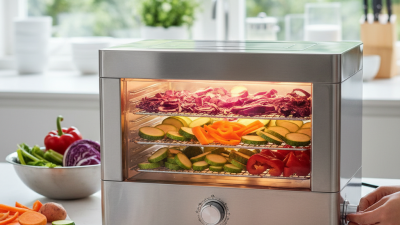
For small workshops, a stainless-steel cabinet dryer offers practical control, easy loading, and simple cleaning. It fits trial batches and seasonal harvests, but trays require manual rotation when airflow is uneven. Medium processors often prefer tunnel dryers. Trolleys move through warmer and cooler zones, improving consistency across several hundred kilograms. Still, poor loading patterns can leave soft centers or dark edges. I would measure moisture inside the thickest pieces, not judge only by color.

Large factories usually need continuous belt dryers with automatic temperature, humidity, and speed controls. They suit steady volumes of sliced fruit, yet they demand reliable power and trained maintenance staff. Sticky mango or sugared berries may need wider belts, gentler heat, or pre-treatment. Freeze-drying protects shape and aroma, but its energy use and purchase cost are substantial. The right match comes from testing the actual fruit, target moisture, labor capacity, and seasonal volume. A dryer that performs beautifully with apples may disappoint with figs.

How to Compare Capacity, Energy Use, and Drying Performance

2026 Best Dried Fruit Dryer for Global Buyers?

How to Compare Capacity, Energy Use, and Drying Performance

Choosing a dried fruit dryer requires more than reading its advertised capacity. Compare usable tray space, batch weight, and airflow across each tray. A machine rated for 100 kilograms may need lower loading for even drying.

In practical testing, sliced mangoes near the door often dried faster than pieces at the center. That difference matters. Record drying time, final moisture, and weight loss for each batch. Use the same fruit thickness and starting moisture during every comparison.

Energy use should be measured per kilogram of finished fruit, not per hour alone. Check heater power, insulation quality, fan efficiency, and heat recovery features. A lower-power dryer may consume more electricity if it runs much longer.

Drying performance also depends on temperature control, humidity removal, and airflow adjustment. Keep a meter beside the machine. Small errors in weighing can distort the result. I have seen promising tests fail because operators opened the door too often.

Tips:

Request a sample test before purchase. Measure moisture in several trays. Ask for cleaning instructions and service records. Confirm voltage, plug type, and local installation requirements. Leave space around the dryer for ventilation. Capacity claims can be optimistic. Real conditions are less tidy. Evaluate noise, loading effort, and spare-part access, because daily handling affects long-term reliability.

What Safety, Hygiene, and Quality Features Should Buyers Check?

2026 Best Dried Fruit Dryer for Global Buyers?

A reliable dryer must protect food, not only remove moisture. The World Health Organization estimates that contaminated food causes 600 million illnesses and 420,000 deaths annually. Buyers should therefore inspect hygienic design closely. Food-contact surfaces should resist corrosion, clean easily, and avoid sharp corners, hollow frames, or trapped fruit residue. Removable trays help workers reach every surface. Sealed doors and controlled air intake reduce dust and pest entry.

Temperature control needs evidence. Ask for sensor calibration records, airflow testing, and batch data logs. A display alone proves little. Drying unevenly can leave soft fruit beside brittle pieces. Product-specific water activity testing is essential; below 0.60 generally prevents microbial growth, but it does not guarantee complete safety. The Codex General Principles of Food Hygiene, revised in 2020, supports validated preventive controls and HACCP-based monitoring.

Look for washable insulation, drainage-friendly floors, and clear cleaning instructions. Stainless steel may still corrode if its grade or weld quality is poor. I would not trust a glossy certificate alone. Request factory test reports, maintenance records, and sample-batch results. Energy efficiency also matters, but shortcuts in sanitation can cost more later. The FAO’s State of Food and Agriculture reports that 14% of food is lost between harvest and retail, making stable, repeatable drying especially valuable. Some specifications remain product-dependent. That is where careful trials matter.

2026 Best Dried Fruit Dryer for Global Buyers? — Safety, Hygiene, and Quality Features to Check
Category Feature to Check Practical Buyer Benchmark Documents or Inspection Evidence Why It Matters
Critical
Food Hygiene
Food-contact construction Product-contact surfaces should use corrosion-resistant stainless steel, commonly AISI 304; AISI 316 is preferable where salt, acid, or aggressive cleaning chemicals are used. Material certificates, weld-finish specification, surface inspection, and a food-contact declaration suitable for the destination market. Unsuitable metals, coatings, or rough welds can cause corrosion, contamination, and difficult cleaning.
Critical
Food Hygiene
Cleanable internal design Rounded corners, drainable surfaces, accessible chambers, removable trays, and no exposed hollow sections or dirt traps in the product zone. Internal photographs, hygienic-design drawings, cleaning procedure, and factory acceptance inspection. Poor accessibility can leave fruit residues and support microbial growth between production batches.
Critical
Food Hygiene
Air filtration and airflow separation Incoming process air should be filtered; the design should prevent contact between exhaust air, combustion gases, lubricants, and food-contact areas. Airflow diagram, filter specification, filter-change schedule, and confirmation that direct-fired exhaust does not contact the product unless specifically validated. Dust, smoke, oil vapour, or recirculated contaminants can reduce food safety and finished-product quality.
Important
Process Control
Temperature control and uniformity Typical fruit-drying programs operate approximately between 40°C and 70°C, depending on fruit, slice thickness, pretreatment, and target quality. Confirm chamber uniformity through testing. Calibrated temperature readings at multiple chamber locations, program records, alarm settings, and a documented heat-distribution test. Hot spots may cause browning or nutrient loss, while cold zones can leave excessive moisture and reduce shelf life.
Important
Process Control
Humidity or exhaust-air management The dryer should provide adjustable exhaust, fresh-air exchange, or dehumidification so moisture removal can be controlled during different drying stages. Airflow and exhaust specifications, control-screen demonstration, and a validated drying curve for representative fruit products. Insufficient moisture removal increases drying time, energy use, case hardening, and the possibility of product spoilage.
Critical
Quality
Final moisture and water activity control Set product-specific moisture limits and verify water activity. A water activity of 0.60 or below is commonly used as a shelf-stability reference for many low-moisture foods, but the correct limit must be validated for each fruit and package. Calibrated moisture and water-activity meter records, laboratory results, batch release criteria, and shelf-life validation. Moisture alone may not predict stability; excessive water activity can permit microbial growth and shorten shelf life.
Important
Quality
Gentle product handling Adjustable air velocity, stable tray loading, uniform spacing, and a program suitable for whole, sliced, or diced fruit without excessive breakage. Product trial using the buyer’s fruit variety, before-and-after weight records, color comparison, and breakage inspection. Excessive airflow or uneven loading can cause shrinkage, sticking, surface drying, and inconsistent texture.
Critical
Safety
Over-temperature protection Independent high-temperature cut-off, automatic heater shutdown, audible or visual alarms, and restart protection after a fault or power interruption. Electrical schematics, safety-relay documentation, alarm test, emergency-stop test, and recorded commissioning results. A failed sensor or control system can create fire, equipment-damage, or product-safety hazards.
Critical
Safety
Fire and combustible-dust risk control Assess fruit dust, dried-product fines, heater temperature, airflow blockage, and ignition sources. Provide accessible cleaning points and suitable fire-prevention measures based on the site risk assessment. Hazard assessment, operating manual, dust-cleaning procedure, heater protection details, and local fire-safety review. Accumulated organic dust and overheated residues can increase fire and explosion hazards in poorly maintained systems.
Critical
Safety
Electrical protection Correct voltage and frequency for the destination country, protective earthing, overload protection, guarded live parts, emergency stop, and electrical enclosure protection appropriate to the installation environment. Wiring diagram, nameplate, insulation and earth-continuity test, risk assessment, and applicable electrical conformity documentation. Incorrect electrical configuration or inadequate protection can cause shock, fire, downtime, or import delays.
Important
Maintenance
Calibration and service access Temperature, humidity, pressure, and weighing instruments should have defined calibration intervals; fans, filters, belts, seals, and heaters should be replaceable without major dismantling. Calibration certificates, spare-parts list, preventive-maintenance schedule, service clearances, and remote-support procedure. Uncalibrated sensors and difficult maintenance can cause inconsistent batches and longer production stoppages.
Important
Traceability
Batch data and recipe records The control system should record product program, time, temperature, alarms, operator actions, and batch identification, with export or backup capability where required. Sample batch report, data-retention specification, user-access controls, and demonstration of record export. Reliable records support recalls, process verification, customer complaints, and regulatory inspections.
Important
Global Use
Documentation and local compliance Provide an English operating manual, cleaning instructions, risk assessment, wiring diagrams, spare-parts list, and conformity documents required by the destination country. Complete technical file, installation instructions, declarations, safety labels, and translated documents where locally required. Missing documentation can delay installation, operator training, customs clearance, or mandatory inspection.
Recommended
Efficiency
Energy performance Compare specific energy consumption in kWh per kilogram of water removed under the same fruit, loading, temperature, and final-moisture conditions. Standardized factory test report showing input energy, product load, drying time, removed water, and measurement method. Nameplate power alone does not show operating cost; inconsistent test conditions can make supplier comparisons misleading.
Important
Validation
Factory and site acceptance testing Require documented tests for empty-chamber temperature uniformity, loaded performance, safety interlocks, cleaning access, and the buyer’s actual fruit product. Signed FAT/SAT protocol, acceptance criteria, product samples, test instruments with calibration status, and corrective-action records. A successful empty-machine demonstration does not guarantee uniform drying or safe operation under production loads.
Buyer note: Final safety, hygiene, electrical, labeling, and import requirements should be verified against the laws and standards applicable in the installation country, product category, and intended market.

How to Choose the Best Dried Fruit Dryer for Global Trade Needs

2026 Best Dried Fruit Dryer for Global Buyers?

How to Choose the Best Dried Fruit Dryer for Global Trade Needs

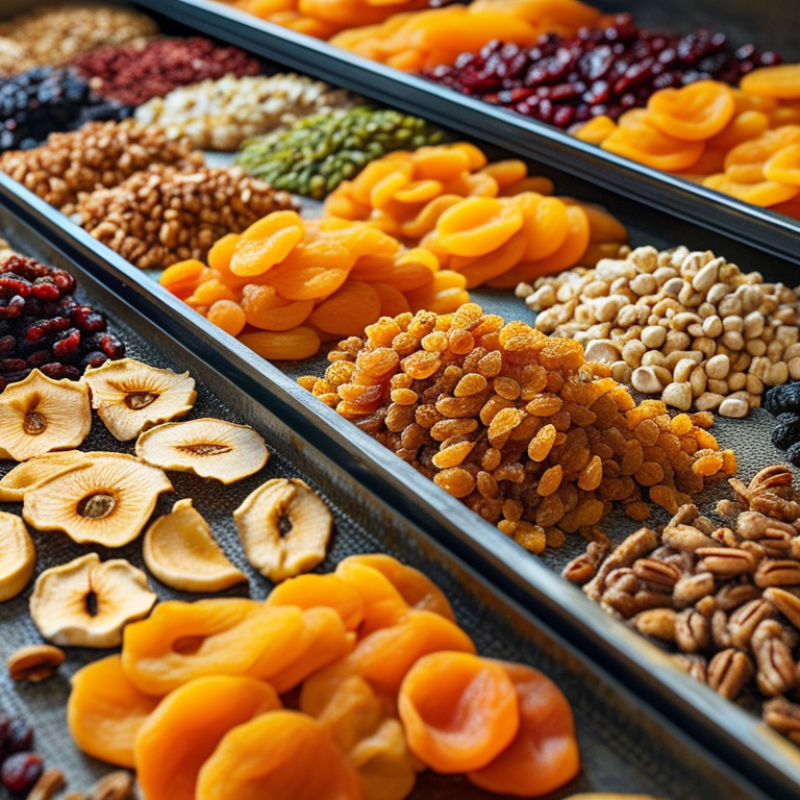
Choosing a dried fruit dryer for international trade requires more than comparing price and advertised capacity. Start with the fruit. Mango slices, raisins, and apple rings release moisture at different speeds. A practical test should check drying uniformity, color retention, texture, and final moisture content. Measure samples from the top, middle, and bottom trays. Uneven results can damage an entire export batch.

Temperature control matters. Look for stable airflow, adjustable heat, and gentle drying options. A sudden temperature rise may darken delicate fruit or harden its outer layer. Energy use also affects long-term costs. Review power requirements, insulation quality, and compatibility with local voltage. A machine designed for one market may need electrical adjustments elsewhere. That detail is easy to miss.

Hygiene and maintenance deserve equal attention. Food-contact surfaces should be easy to clean, while removable trays reduce downtime. Ask for clear manuals, spare-part availability, safety documents, and installation support in your destination country. These details support reliable customs and buyer requirements. In real production, small issues appear: a door seal may wear early, or airflow may change after heavy use. No dryer is perfect. Leave room for inspection, operator training, and honest performance testing before committing to a large purchase.

2026 Best Dried Fruit Dryer for Global Buyers

Typical final moisture targets are an important reference when comparing dryer temperature control, airflow uniformity, and drying capacity for international trade.

The values show practical commercial target averages for common dried fruits. Actual specifications may vary according to fruit maturity, cutting size, sugar content, packaging format, and destination-market requirements.