How to Choose the Best High Temperature Heat Pump for Your Needs
Choosing the right High Temperature Heat Pump is critical for both efficiency and comfort in heating applications. According to the U.S. Department of Energy, heat pumps can provide up to three times more heat energy than the electrical energy they consume. This efficiency makes them an attractive option for residential and commercial heating. However, selecting the best unit can be overwhelming due to varying specifications and operational demands.
One must consider factors like climate, building size, and specific heating requirements. For instance, High Temperature Heat Pumps are particularly beneficial in colder climates, where traditional systems may falter. A study by the International Energy Agency showed that high-temperature models can operate effectively in temperatures as low as -25°C.
Despite their advantages, these systems can be an investment. It is essential to weigh the long-term energy savings against the initial cost. Additionally, not all models perform equally; reliability varies between brands and features. Researching and comparing options is not just advisable—it's necessary for ensuring that you choose the best High Temperature Heat Pump for your needs.
Understanding High Temperature Heat Pumps: An Overview
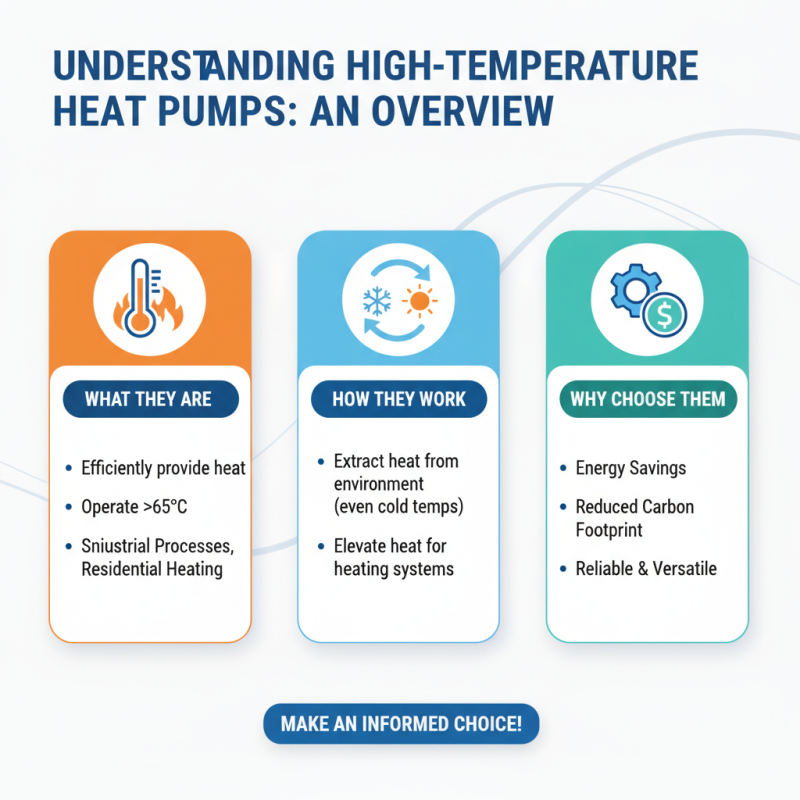
High temperature heat pumps have gained popularity for their ability to efficiently provide heat in various applications. These systems can operate at temperatures exceeding 65°C, making them suitable for industrial processes and residential heating. Understanding how they work is crucial for making an informed choice. These pumps extract heat from the environment, even in cold temperatures, and elevate it for use in heating systems.
Many consumers are new to this technology, and confusion can arise. One must consider the heating requirements of their space, the climate conditions, and energy efficiency ratings. Familiarity with the specific needs of your environment can greatly influence your decision. The correct heat pump must provide the necessary temperature without excessive energy use.
Market options vary widely, which complicates the selection process. It's crucial to seek expert advice or to consult resources that highlight features and performance across different models. Remember, not every system is perfect. An imprecise fit might lead to inefficiencies. A good match would deliver comfort and long-term savings. Engage with knowledgeable professionals to ensure the system you choose truly meets your unique demands.
Key Factors to Consider When Selecting a Heat Pump
When selecting a high temperature heat pump, several key factors are paramount. Understand the climate in your area. In extremely cold regions, a heat pump's efficiency drops. Look for models that perform well in low temperatures. This ensures reliable heating during the cold months.
Next, consider the size of your space. An oversized unit can lead to inefficiencies. It may cycle on and off frequently, wasting energy. Conversely, a unit that’s too small may struggle to maintain comfort levels. Calculate the heating needs of your space carefully.
Energy efficiency is another crucial aspect. Check the Seasonal Energy Efficiency Ratio (SEER) and Heating Seasonal Performance Factor (HSPF) ratings. Higher ratings typically mean lower operating costs and environmental impact. Ensure you also evaluate installation requirements. Sometimes, existing ductwork may need upgrades or insulation improvements. Choosing the right professional for installation is equally important. Experience impacts the system's overall performance. Take your time to reflect on these elements. Making the right choice today affects your comfort for years to come.
How to Choose the Best High Temperature Heat Pump for Your Needs - Key Factors to Consider When Selecting a Heat Pump
| Factor |
Description |
Importance Level |
| Heating Capacity |
The amount of heat the pump can provide, measured in BTUs. |
High |
| Efficiency Rating |
Measured by COP (Coefficient of Performance) for energy efficiency. |
High |
| Noise Level |
The sound produced by the heat pump during operation, measured in decibels (dB). |
Medium |
| Refrigerant Type |
The type of refrigerant used, impacting both performance and environmental factors. |
Medium |
| Installation Requirements |
Space and infrastructure needed for proper installation of the unit. |
High |
| Cost |
The initial purchase price and any additional installation or maintenance costs. |
High |
| Warranty |
The duration and coverage of the manufacturer's warranty. |
Medium |
Assessing Your Heating Requirements for Optimal Performance
When considering a high-temperature heat pump, assessing your heating requirements is crucial. Start by evaluating the size of your space. Measure the square footage and identify insulation quality. Older homes may have inadequate insulation, impacting efficiency. Gather specific data on peak heating needs during the coldest months. This will ensure you select a system that operates optimally.
Next, understand your climate conditions. Areas with extreme temperatures require more robust systems. Research the average winter lows in your location. This knowledge allows you to choose a heat pump that can handle varied conditions. Don't forget to consider your energy efficiency goals. Programs like the HSPF (Heating Season Performance Factor) can guide you.
In this process, mistakes can occur. You might underestimate your heating needs or overlook local climate variations. Take time to reflect on your current system's performance. If it's failing to maintain comfort, reassess your requirements. Adapt your choices responsibly to ensure you invest in a heat pump that meets your specific heating demands. Optimal performance starts with clear assessment and thoughtful planning.
Comparing Efficiency Ratings: What You Need to Know
When selecting a high-temperature heat pump, efficiency ratings are crucial. These ratings reflect how well a unit operates. A Seasonal Energy Efficiency Ratio (SEER) and Heating Seasonal Performance Factor (HSPF) are key indicators. A high SEER—above 16—indicates energy efficiency in cooling. Similarly, an HSPF above 8.2 shows effective heating capability. According to the U.S. Department of Energy, systems with high ratings can reduce energy costs by 30% or more.
Understanding these ratings can be complex. Efficiency can vary based on climate and usage patterns. The Energy Star program recommends looking for models that exceed the minimum efficiency requirements. Yet, the ideal choice for each user may differ. Some may prioritize lower upfront costs while others focus on long-term savings. This trade-off can lead to poor decisions if not carefully considered.
Data indicates that over 40% of users fail to account for their specific heating needs. This can lead to underperformance or oversizing the equipment. User education is key. Engaging with professionals who understand local climate and system behavior can prevent costly mistakes. Investigating various models and comparing efficiency ratings fosters informed choices. Remember, efficiency can translate directly into savings and environmental impact over time.
Comparing Efficiency Ratings of High Temperature Heat Pumps
Budgeting for Your High Temperature Heat Pump Purchase and Installation
When budgeting for a high temperature heat pump, it's essential to
consider all costs involved. The initial purchase price can vary greatly based on size, efficiency, and technology.
Don’t forget to factor in installation costs, which can significantly
increase your total expenditure. Hiring a qualified technician ensures proper setup, but be prepared
for additional labor fees.
You should also consider operational expenses. How much energy will the unit consume?
Evaluate the efficiency ratings and look for rebates that may lower your overall costs.
Anticipate maintenance costs as well. Regular servicing can prevent expensive repairs and extend the unit's lifespan.
Involving a financial plan may help you make this investment wisely. Create a clear budget that accommodates unexpected expenses.
Emergency costs can arise from system failures or additional components needed for installation. It’s prudent to leave some room
in your budget for these scenarios. The decision to invest in a high temperature heat pump
is significant; reflecting on all financial aspects will guide you toward the best choice for your needs.